Can You Bring a Lightstick on a Plane? The Answer Depends on Which Kind You Own

A lightstick may travel on a plane, but check its battery type and your airline before packing. Our simplest packing recommendation is the lightstick and protected batteries in your cabin bag. Spare lithium batteries must stay out of checked baggage. US FAA rules allow alkaline dry cells in either bag; that permission is not a rule for every country or airline.
Rules first checked against TSA, IATA, EASA, Korea's transport ministry and Incheon Airport on 2026-09-10, reread 14 October 2026; EASA reread 12 November 2026. Where a rule is legal in one country but we advise something stricter, the table says which is which.
Most English results answer a different question. They are about glow sticks, the chemical tubes you snap, which are judged as a liquid. A K-pop lightstick, 응원봉 (eungwonbong) in Korean, is a battery-powered device, so battery rules apply instead. Everything below is for when you want to check a bag or are flying out of Korea.
Thirty seconds: open the battery door
Check the model and the battery label. AAA describes a size, not a battery chemistry. Read whether the cells say alkaline, NiMH or lithium, then check whether they are installed in the lightstick or carried separately. The first table covers alkaline cells and lithium packs; ask the airline about a different chemistry or an unreadable label.
| What you find | How aviation rules classify it | Where it can go | Rule checked |
|---|---|---|---|
| AAA alkaline cells, fitted in the compartment | Dry batteries in a device | US FAA: carry-on or checked; protect the device from activation and damage | FAA, checked 16 November 2026 |
| A rechargeable pack, fitted in the compartment | Lithium battery contained in equipment | Cabin advised. Checked only if switched fully off, protected from being switched on, within the Wh limit, and your airline allows it; some airlines ban it | EASA, 2026-11-12 |
| A lithium battery taken out and loose in your bag | Spare battery | Carry-on only, terminals insulated | EASA, 2026-11-12 |
| AA or AAA alkaline cells taken out | Spare dry cells | US FAA permits either bag with terminals protected; we recommend the cabin and checking the airline | FAA dry batteries, checked 16 November 2026 |
| Nothing, on a verified model sold without cells | Not a battery item | Either bag | Weverse Shop product pages, 2026-09-10 |
For a lithium battery, installed versus spare changes the checked-baggage rule. An installed pack may be allowed if the airline permits the device, it is fully switched off and protected, and its capacity is within the applicable limit. A removed lithium pack is a spare and cannot go in checked baggage. Alkaline cells have a different US rule: the FAA allows protected dry cells in either bag. Check your airline rather than applying the lithium rule to every loose battery.
Which battery does your lightstick actually take?
Every official HYBE lightstick this page could verify on Weverse Shop product pages runs on three AAA alkaline batteries, sold separately. That covers the BTS Official Light Stick VER.4, the MAP OF THE SOUL special edition, and the SEVENTEEN Official Light Stick VER.3.
HYBE also sells a rechargeable lithium polymer pack separately. It is not built into the lightstick. It drops into the same slot the AAA cells would occupy, which is exactly why the installed-versus-loose distinction above decides your answer.
Pages from other agencies could not be opened for this article, and reseller listings are not reliable enough to quote. Check the specification for your own model rather than assuming it matches a HYBE one.
Spare cells, power banks and the numbers that apply
For a rechargeable pack, read its Wh label. If only voltage and mAh are shown, calculate Wh = V × mAh ÷ 1,000. For example, a hypothetical 3.7 V, 2,000 mAh pack is 7.4 Wh. That calculation does not itself approve the battery for travel; send the label and device details to your airline.
| Item | Carry-on | Checked | Rule checked |
|---|---|---|---|
| Power bank, 100 Wh or less | Yes, up to 2 per person from Korea | Not permitted | Korea, 2026-04-20 |
| Power bank, over 100 Wh up to 160 Wh | Yes, up to 2, airline approval required | Not permitted | Incheon, 2026-09-10 |
| Power bank over 160 Wh | Not permitted | Not permitted | Incheon, 2026-09-10 |
| Unused AAA alkaline cells | Yes, protect the terminals | US FAA permits them; our recommendation is to keep them in the cabin and confirm your airline's rule | FAA dry batteries, 16 November 2026 |
The alkaline row is a US rule from the FAA, not a worldwide allowance. Keep spare cells in their retail packaging, a battery case, or with exposed terminals covered so they cannot touch metal. Do not carry damaged batteries. Your airline can impose additional restrictions.
Flying out of Korea
For a flight departing Korea, check the power-bank rules separately from the lightstick battery.
Korea's Ministry of Land, Infrastructure and Transport announced the revised power-bank rules on 8 April 2026, with implementation from 20 April. Its release and attached rule table allow at most two power banks per passenger, with airline approval required above 100 Wh and up to 160 Wh; anything above 160 Wh is not allowed. The release bans both charging the bank and using it to charge another device during the flight. We reread the attachment on 16 November 2026.
Power banks stay out of checked baggage. Follow the airline's instructions for keeping them accessible and out of overhead storage. Do not assume a removable lightstick pack counts as a power bank: tell the airline whether it only powers the lightstick or also charges another device. Its chemistry, capacity and installed or spare status still need checking.
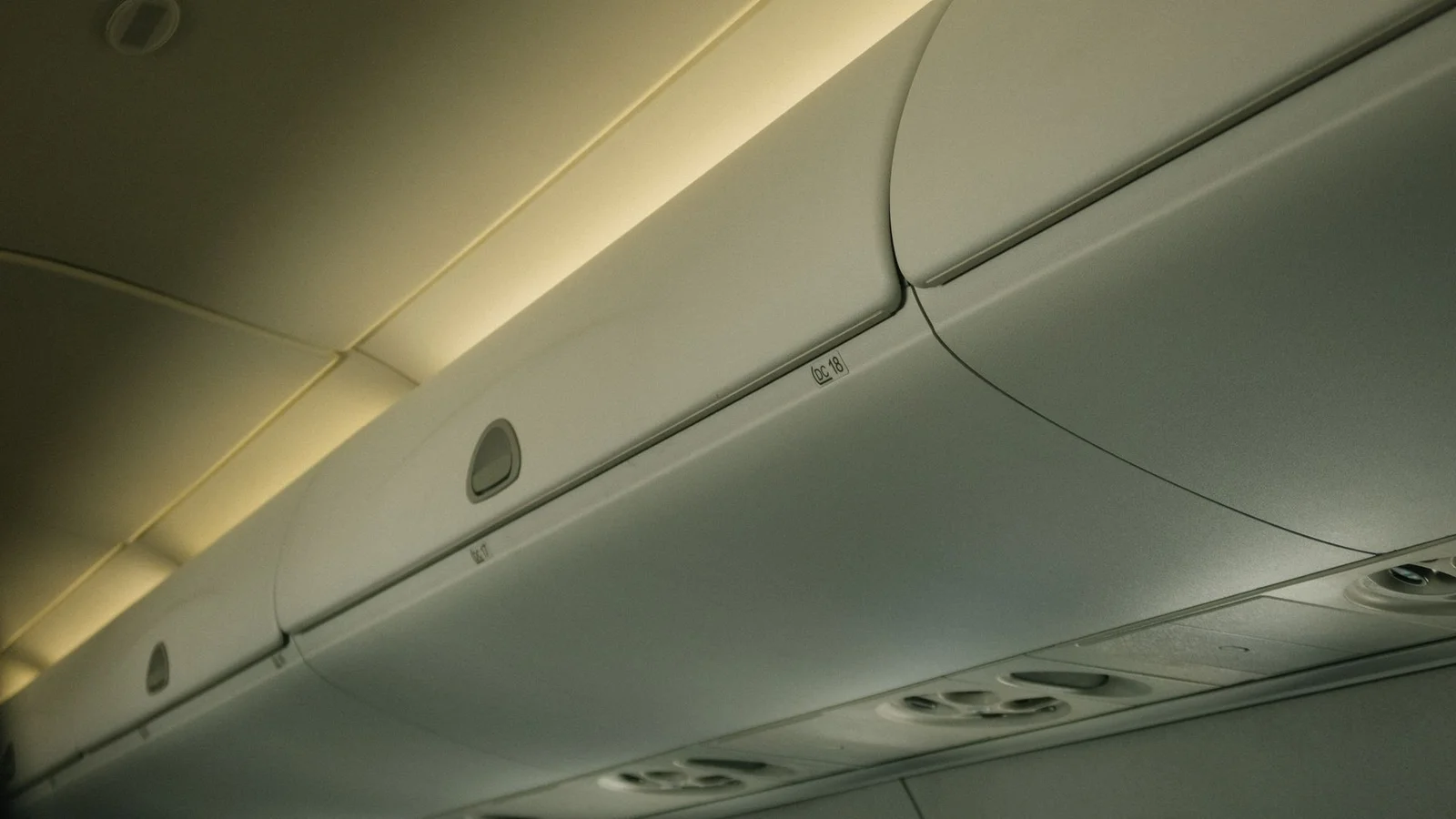
Other countries have brought in power bank limits of their own, on different dates. Where your departure and arrival countries disagree, what binds you is the rule enforced at the airport you are standing in plus the policy of the airline you fly, whichever is stricter. Incheon Airport says as much in its English FAQ. Check your airline and every departure and transit airport on your itinerary rather than assuming one national standard carries you through.
An unusual shape needs a separate security check
Batteries are the rule you can look up. Screening is the part that happens in front of a person.
A battery-compliant item can still need a separate security decision. If the lightstick resembles a weapon, send the exact model or a photograph to the airline or departure airport before travel. We cannot promise that an unusual shape will be accepted in either bag. Keep it accessible for inspection and ask how to pack the body and batteries separately if required.
Buying one in Seoul and flying home
The HYBE models verified for this page ship without cells, so a boxed new purchase from those lines has no battery to declare. Check the specification of your own product rather than assuming every sealed box is empty.
Buy the batteries after you land, or pick them up at a convenience store in Seoul and keep them in your cabin bag with the terminals protected.
The short version
Our packing recommendation is to carry the lightstick and protected batteries in your cabin bag. If you check the device, confirm the airline permits it and switch it fully off. Spare lithium packs and power banks cannot be checked; protected alkaline dry cells are allowed by US FAA rules, subject to your route and airline. If your cabin bag is checked at the gate, remove spare lithium batteries and power banks first.
Sources
- TSA — Dry batteries (AA, AAA, C, and D) (checked 14 October 2026)
- IATA — Dangerous Goods Guidance for Passengers (checked 14 October 2026)
- EASA — Dangerous goods when flying: devices in checked bags must be completely switched off and protected from activation; some airlines ban them; spares in the cabin only (reread 12 November 2026)
- Ministry of Land, Infrastructure and Transport (Korea.kr) — power bank limit of 2 and in-flight use ban, press release 8 April 2026 (checked 14 October 2026)
- Incheon International Airport — Carry-on restricted items FAQ (checked 14 October 2026)
Related guides
- KSPO DOME Seoul: Seat Map, Bag Rules, and Getting Home
- K-pop Music Shows in Seoul: What Is On Each Day, and How Fans Actually Get In
- What to Bring to a K-pop Concert in Korea: Check Your Show's Rules
Frequently asked questions
Should I leave the batteries inside my K-pop lightstick when I fly?
For a cabin bag, either installed or separately protected batteries may be suitable, depending on their chemistry and the airline. Removing alkaline cells for storage can help prevent leakage, but it does not turn them into lithium batteries. If you check a lightstick, a removed lithium pack must stay in the cabin. US FAA rules allow protected spare alkaline cells in checked baggage; we still recommend carrying them with you and checking the airline.
Is a K-pop lightstick treated like a glow stick at airport security?
No, and that is the confusion this page exists to fix. A glow stick is a sealed tube of liquid chemicals and falls under the liquids rule. A lightstick is an electronic device with batteries and falls under battery rules.
Does my K-pop lightstick count toward the two power bank limit in Korea?
The Korean release states a limit for power banks. It does not classify every lightstick pack. Tell the airline the exact battery model, Wh rating, whether it is installed, and whether it can charge other devices; ask which category and allowance apply. Do not assume that a removable pack is exempt from a limit.
What about a K-pop lightstick from a label other than HYBE?
Only HYBE product pages could be verified in English for this article. Open your own battery door and use the table above, which works from what is physically in the compartment rather than from a brand name.
Can I check my K-pop lightstick with the rechargeable pack still inside it?
Often, but not always. EASA allows it only if the device is completely switched off and protected from accidental activation, within the Wh limit, and notes that some airlines ban such items from checked bags altogether. The cabin is the better choice, and if screening asks you to remove the pack it immediately becomes a spare battery that cannot be checked.
Update log: 12 November 2026, added a battery decision chart and a cabin photo, separated alkaline from lithium spares, and added the EASA conditions for checked devices.
Update, 16 November 2026: Corrected alkaline versus lithium rules in both tables, conclusion and FAQ; added label/Wh and gate-check actions; reread Korean power-bank rule attachment; removed an untraceable screening anecdote.
Cover photo: An audience lightstick ocean at an EXO concert. Photo by Foxy'Stay, Wikimedia Commons, CC BY-SA 4.0, taken 8 October 2025. (CC BY-SA 4.0)


Comments
Post a Comment